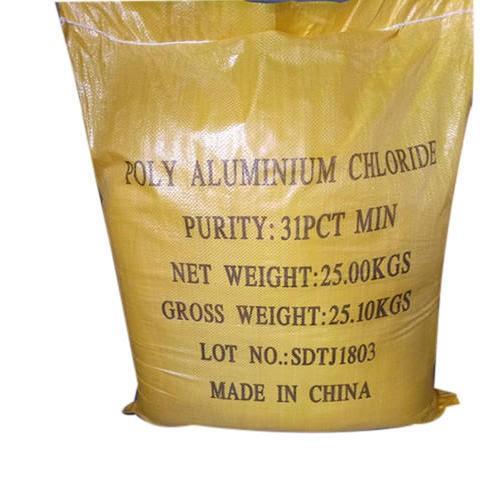
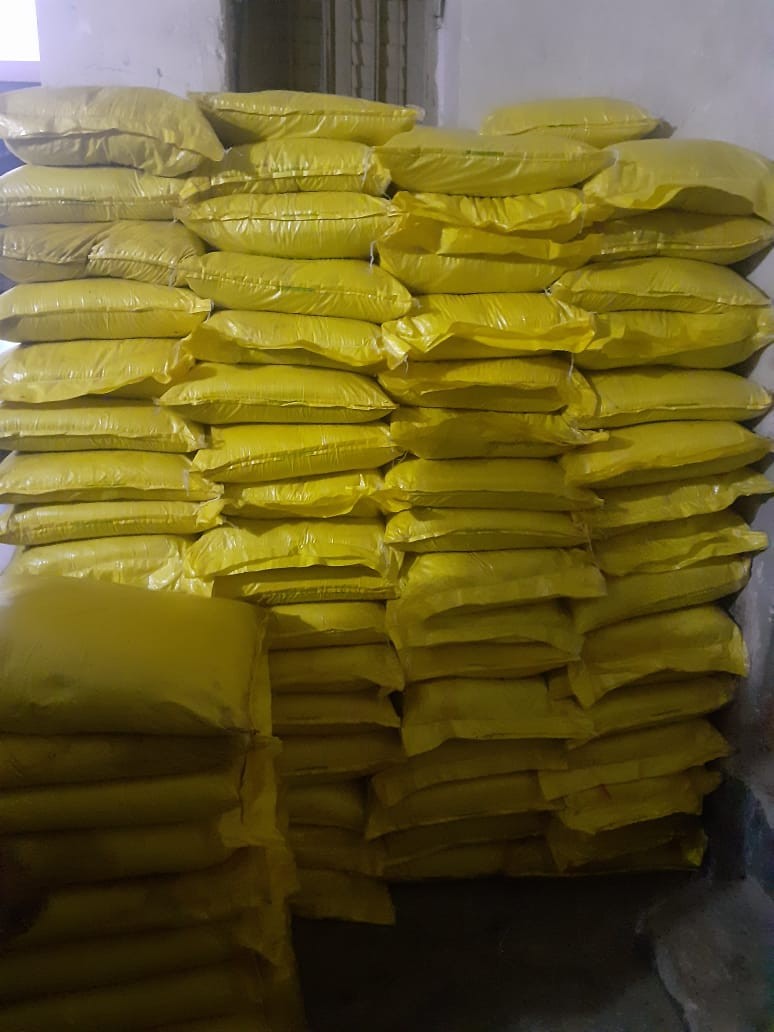
Poly Aluminium chloride (PAC)- 25kg Pack
Made In Chine
Understanding Poly Aluminium Chloride (PAC)
Poly Aluminium Chloride (PAC), often abbreviated as PAC, is a water treatment chemical widely used for its exceptional coagulant properties. It's a highly effective inorganic polymer coagulant, produced through the hydrolysis of aluminium chloride. PAC plays a crucial role in various water purification processes, including wastewater treatment, drinking water clarification, and industrial effluent treatment.
How Poly Aluminium Chloride (PAC) Works
The mechanism of action of poly aluminium chloride involves the formation of highly charged, polymeric aluminum hydroxide species. These positively charged particles neutralize the negatively charged colloidal particles present in water, leading to destabilization and subsequent aggregation. The aggregated particles form larger, heavier flocs that can be easily removed through sedimentation or filtration.
Benefits of Using Poly Aluminium Chloride (PAC)
- High Efficiency: PAC exhibits superior coagulation and flocculation properties compared to traditional coagulants like alum.
- Wide pH Range: It is effective over a broad pH range, making it suitable for various water quality conditions.
- Rapid Sedimentation: PAC promotes faster and more efficient sedimentation of suspended solids.
- Cost-Effective: It often requires lower dosages compared to other coagulants, resulting in cost savings.
- Reduced Sludge Production: PAC generally produces less sludge, simplifying the sludge disposal process.
- Environmentally Friendly: When used correctly, PAC has minimal environmental impact.
Applications of Poly Aluminium Chloride (PAC)
- Wastewater Treatment: PAC is extensively used in municipal and industrial wastewater treatment to remove suspended solids, turbidity, color, and organic matter.
- Drinking Water Treatment: It is employed to clarify drinking water by removing impurities and improving its aesthetic quality.
- Industrial Water Treatment: PAC finds applications in various industries, including papermaking, textile dyeing, and metal finishing, to treat process water and wastewater.
- Other Applications: PAC can also be used in sludge dewatering, aquaculture, and swimming pool water treatment.
The effectiveness of poly aluminium chloride depends on several factors, including:
- Water Quality: Parameters such as pH, turbidity, alkalinity, and temperature influence PAC dosage and performance.
- PAC Dosage: The optimal PAC dosage varies based on water characteristics and desired treatment goals.
- Coagulation and Flocculation Processes: Proper mixing and settling conditions are essential for efficient PAC utilization.
- Jar Test: Laboratory jar tests are conducted to determine the optimal PAC dosage and coagulation conditions.
Safety Precautions When Handling Poly Aluminium Chloride (PAC)
- PAC is considered a relatively safe chemical when handled appropriately.
- It is essential to wear protective gear, including gloves, goggles, and protective clothing, when handling PAC.
- Avoid contact with skin and eyes. In case of contact, rinse thoroughly with water.
- Store PAC in a cool, dry place, away from incompatible substances.
Conclusion
Poly aluminium chloride (PAC) is a versatile and efficient coagulant widely used in water and wastewater treatment. Its ability to remove impurities, improve water quality, and reduce treatment costs has made it a preferred choice for many industries. By understanding the factors affecting PAC performance and following safety guidelines, it is possible to optimize its application and achieve desired treatment objectives.
"কেমিক্যাল পণ্যের সকল অর্ডারের জন্য ১০০% অগ্রিম পেমেন্ট প্রযোজ্য। পেমেন্ট নিশ্চিত হওয়ার পর অর্ডার প্রসেসিং ও পণ্য সরবরাহের কার্যক্রম শুরু হবে।"